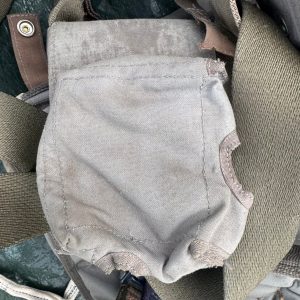
The Aircrew Parachute Harness/Pack – Vulcan & Victor Crew Seats is a specialized military aviation component associated with compatible aircrew seating and emergency equipment configurations.
An Aviation Parachute Harness and Pilot Parachute Harness should be identified through labels, part numbers, manufacturing records, and configuration-specific information.
Every Aircraft Emergency Parachute Harness, Aircrew Safety Harness, Flight Crew Parachute Harness, Emergency Parachute Harness, or Military Aircrew Harness requires individual inspection because age, storage, wear, and modification can affect condition.
An Aviation Emergency Escape Harness may include webbing, fittings, attachment points, adjustment hardware, container-related components, and seat-interface features depending on the exact design.
Aircraft Parachute Equipment offers the strongest value when condition, origin, markings, storage history, and intended sale status are disclosed transparently.
Exploring the Aircrew Harness and Pack Configuration
Detailed identification protects historical accuracy and reduces incorrect compatibility claims.
Photographs should show the front, rear, sides, webbing, buckles, attachment points, pack, labels, stitching, hardware, and areas of wear.
Military Harness Structural Features
An Aviation Parachute Harness typically relies on load-bearing webbing, reinforced stitching, metal fittings, adjustment hardware, attachment points, and configuration-specific connections.
Qualified evaluation is essential before any safety-related classification is assigned to the Aviation Parachute Harness.
Pilot Harness Strap Configuration
An aged harness should not be worn or adjusted forcefully when webbing, buckles, or fittings may be fragile.
Professional conservation can protect both the Pilot Parachute Harness and its historical significance.
Emergency Harness System Integration
An Aircraft Emergency Parachute Harness is intended to connect the wearer securely with a compatible parachute and escape system during emergency procedures.
Paint, plating loss, scratches, or movement marks may provide information about previous use and storage.
Historic Aircrew Restraint Equipment
An Aircrew Safety Harness may serve as part of a parachute, restraint, escape, survival, or crew-seat equipment system depending on its exact design.
Historic harnesses should be stored away from direct sunlight, moisture, pests, chemicals, sharp objects, heat, and uncontrolled handling.
Historic Flight Equipment Condition Review
A clean appearance does not establish structural strength or operational suitability.
Documented history can add substantial collector value.
Emergency Parachute Harness Inspection
A documented inspection preserves both technical information and Aviation Parachute Harness collector value.
Professional advice may be appropriate when preservation or safety classification remains uncertain.
Preserving Cold War Aviation Safety Gear
A Military Aircrew Harness associated with Vulcan and Victor crew seating can hold significant interest for collectors of British military aviation, historic aircraft equipment, and Cold War-era artifacts.
Displays should limit exposure to bright light, humidity changes, dust, and public handling.
Aviation Emergency Escape Harness System
A complete-looking harness/pack should not be represented as a complete escape system without supporting information.
Wear patterns can sometimes show how straps or fittings were routed, but interpretation should remain cautious.
Parachute Harness Assembly Components
Completeness should be described through visible evidence and available records.
Small fittings, retainers, straps, pins, covers, or connectors may have significant restoration value.
Choosing Aircraft Crew Safety Equipment
Transparent classification protects buyers and preserves historical context.
Routine preservation should include gentle dust removal, condition photography, label recording, humidity control, pest monitoring, and suitable storage support.
Choosing Aircrew Survival Components
A harness/pack associated with Vulcan or Victor crew seats can contribute to research into military cockpit equipment and emergency procedures.
Claims about operational readiness should require current professional evidence.
Understanding a Pilot Emergency Parachute System
Historic parachute equipment may have exceeded original service intervals or contain materials affected by age and storage.
Noninvasive inspection may be preferable for preservation-focused buyers.
Preserving an Aviation Harness Assembly
The item should remain removable for inspection and future conservation.
Handling can accelerate webbing wear and damage original fittings.
Choosing a Flight Parachute Harness
An operational buyer requires entirely different inspection, certification, and system-compatibility considerations.
Commercial value can be influenced by verified Vulcan or Victor association, rare markings, complete hardware, original pack configuration, preserved labels, and documented history.
Avoiding Incorrect Harness Substitution
Components should not be combined merely because they connect physically.
The seat itself should be reviewed for attachment points, routing, hardware, clearances, and equipment relationships before a harness/pack is installed for display.
Vulcan and Victor Harness Condition Guide
The seller should disclose cut straps, missing fittings, corrosion, mildew, staining, odors, repairs, modifications, opened packs, and unknown internal contents.
- Request photographs of the front, rear, sides, webbing, stitching, buckles, attachment points, pack, labels, and included loose parts.
- Inspect webbing for fading, stiffness, fraying, cuts, abrasion, mildew, stains, chemical damage, burned areas, pulled fibers, and unauthorized repairs.
- Retain purchase records, photographs, provenance documents, packaging, and condition reports with the collection or restoration file.
Protecting Military Aircrew Equipment
The assembly should receive padded support so heavy hardware does not rest directly on aged webbing.
Any suspected mold or chemical contamination should be isolated and assessed carefully.
Displaying the Vulcan and Victor Harness/Pack
Padded ties, archival supports, or reversible brackets may help maintain the display while avoiding permanent alteration.
Lighting should be limited to reduce fading and fiber deterioration, while the display case should protect against dust, touch, moisture changes, and accidental impact.
Protecting Aviation Safety Equipment
Aggressive cleaning can remove original markings, finishes, inspection evidence, or historically significant wear.
Repairs intended for display should remain reversible and clearly documented.
Buying Historic Military Aircrew Parachute Equipment
The Aircrew Parachute Harness/Pack – Vulcan & Victor Crew Seats may suit museums, military aviation collectors, cockpit restorers, historians, preservation specialists, and buyers seeking authentic aircrew equipment.
Careful technical, historical, and commercial evaluation can reduce authenticity concerns, condition surprises, missing-component costs, and unsuitable-use assumptions.
Whether collectors search for an Aviation Safety Harness, Flight Parachute Harness, or Aircraft Parachute Equipment, historical value should remain separate from operational suitability.
With accurate identification, preservation-focused care, suitable environmental control, and careful interpretation, the assembly can remain an important military aviation artifact.